Projects

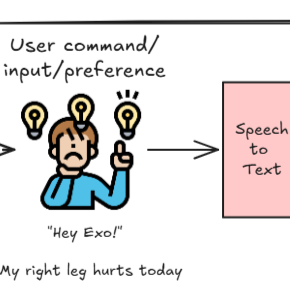
Illustration for Talking to Robots multimodal interface project

VLM-based human–robot voice interface

Talking to Robots · Fall 2025

Built a multimodal pipeline for long-horizon, language-driven control: finetuned a compact vision-language model (Qwen3-VL-2B with SFT and LoRA) on a custom dataset pairing egocentric-style scenes, spoken-style instructions, and exoskeleton-relevant control targets, including deliberate ambiguity so the policy cannot rely on template phrases.

The emphasis was on whether vision plus audio grounding could support stable parameter proposals across sessions—not just single-turn demos—mirroring how wearable assist devices are actually used.
Automated IV insertion prototype hardware

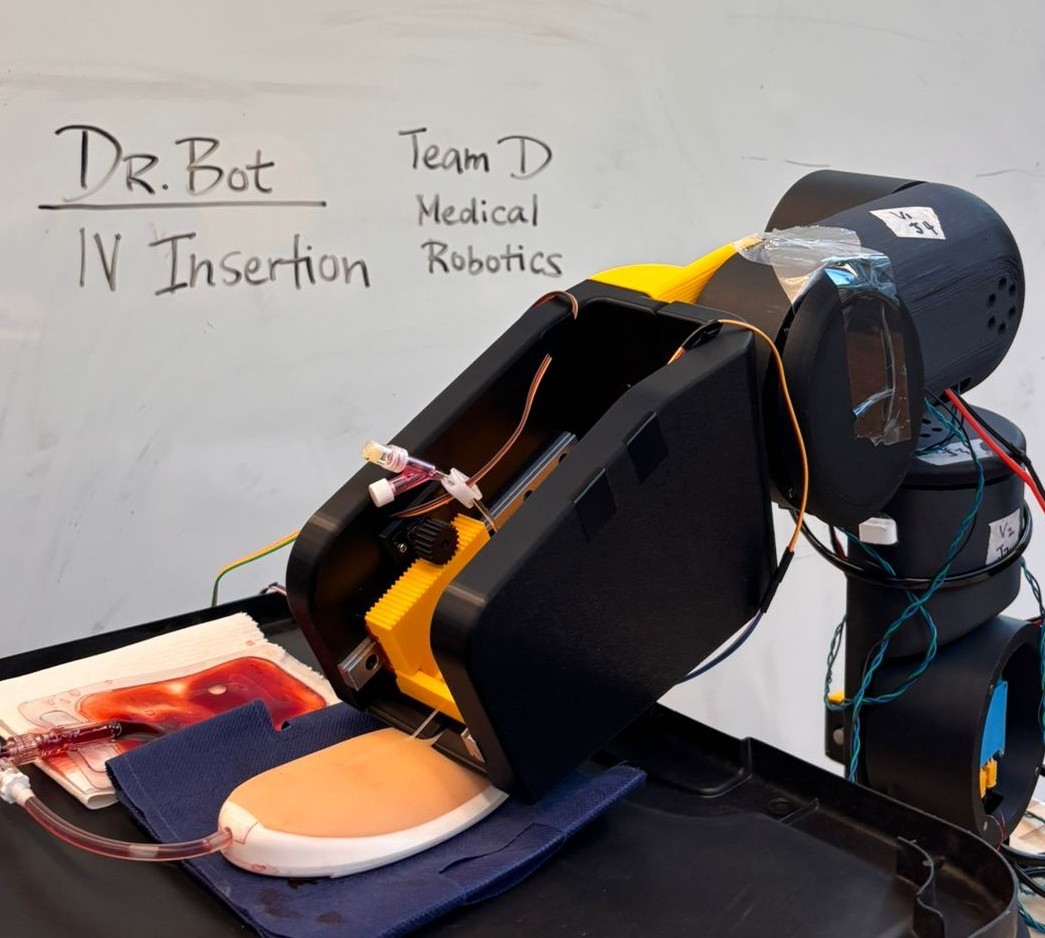
Automated IV insertion bot

Medical Robotics · Fall 2025

End-to-end bench prototype: custom 3D-printed linear actuators, vein localization with a lightweight detector (Tiny-YOLO family), and Arduino-driven servo sequencing for insertion. Integration work focused on closing the loop between camera, planner, and actuation under timing and safety constraints realistic for a class setting.

Measured end-to-end procedure time improved by roughly a quarter versus our manual baseline in the same setup—mostly from automating alignment and approach rather than from faster hand motion alone.

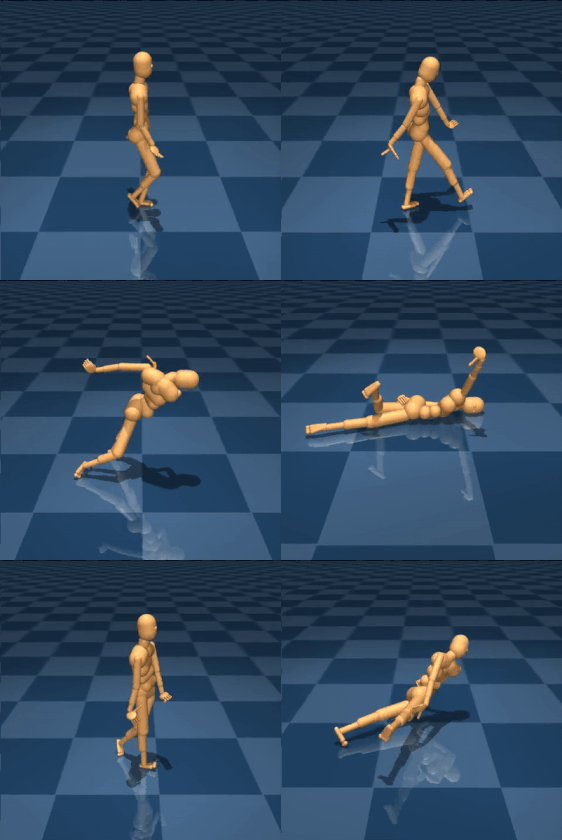
Simulated humanoid locomotion imitation

Generative adversarial imitation learning for locomotion

Introduction to Robot Learning · Spring 2025

Explored inverse reinforcement learning for humanoid walking: combined state-level bidirectional GAN discriminators with trajectory-level GAIL-style objectives so reward structure could be inferred from PPO-generated expert mocap trajectories instead of hand-coded shaping alone.

Goal was to understand when generative reward models help imitation under partial observability versus when they collapse to brittle mode-matching—a useful contrast to the explicit parameter targets I use in exoskeleton work today.

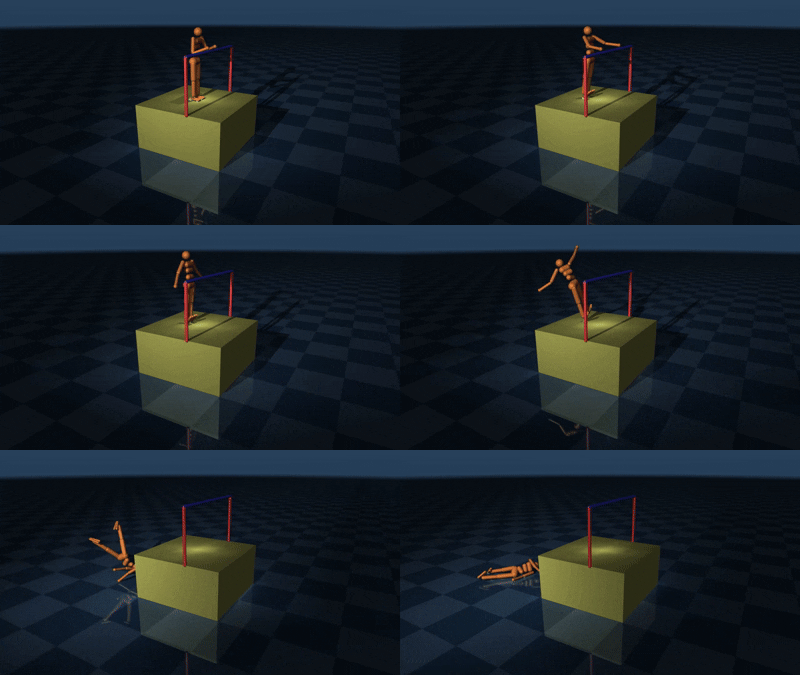
Humanoid balancing on moving platform simulation

LQR for humanoid balancing on a moving base

Optimal Control and Reinforcement Learning · Spring 2025

MuJoCo humanoid on a dynamically moving platform with an LQR-derived balancing policy, sweeping contact and disturbance conditions to see where linearized controllers remain trustworthy and where nonlinear effects dominate.

Good sanity check for how classical tools behave before layering learned components on top of unstable plants—directly relevant to exoskeletons, where the human in the loop is the dominant unmodeled dynamics.